
How do adolescents in Kenya see their food choices?
There has been growing concern over the fast-paced changing menu of available food choices for adolescents in Africa. This increasingly exposes adolescents to poor diets and future health risks from diseases such as diabetes and hypertension. Depending on the adolescents’ financial position and food choices, they may be prone to being either underweight, overweight, or lacking essential minerals and vitamins necessary for their normal body function and growth. This is commonly referred to as the “triple burden of malnutrition”.
Yet much of the current evidence overlooks adolescents’ own experiences, views, and choices in urban African settings. This article provides a perspective from young adolescents aged 12 to 13 years attending school in an informal settlement in Kisumu, Kenya to address the above-mentioned knowledge gap through their own photographs, drawings of where they get food, and stories.
The adolescents were involved in two steps. First, they used mobile phones to take pictures of items that represent their food-related spaces, experiences, and choices. Second, they presented their pictures and drew maps of their neighborhood while telling a story to reflect on their own personal experiences with food and their immediate surrounding.
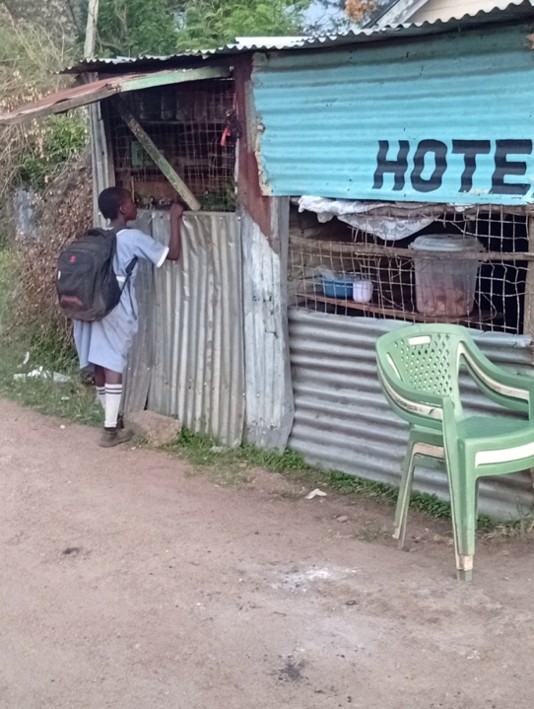
Both steps were facilitated by adult researchers to achieve a common understanding of the task, and later to critically discuss each student’s unique images and stories.
The adolescents’ ideas were brought together into three areas; (1) Adolescents are eager to try new foods although they are often limited to most available and familiar choices; (2) Adolescents are still mostly dependent on adults for food even though when opportunity presents, adolescents feel excited to make their independent choices; (3) Social norms are still a grounding force for adolescents influenced by both peers and family in different ways.
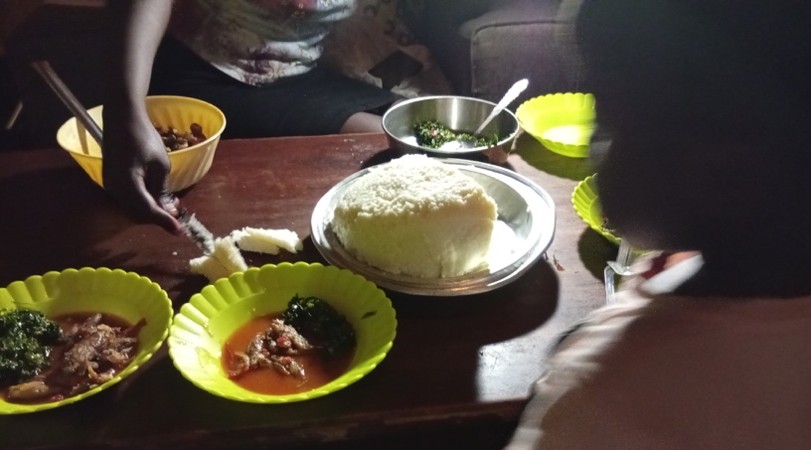
Adult-led routine, food accessibility, and social norms routine remain a compass for young adolescents’ food choices in Kisumu as their eating behavior evolves and they gain independence. Adolescence is a formative age and presents an opportunity to guide and shape lifelong nutrition behavior among these young adolescents that can mitigate the future health and nutrition risks. As adolescents make more food choice on their own, now is a key window to influence their lifelong food choice.
Click on this LINK to read the peer reviewed manuscript as published by the Changemaker consortium: https://doi.org/10.1186/s41043-026-01421-8

0 comments