
Changemaker Baseline Survey Data Collection in Burkina Faso
Baseline data collection for the Changemaker study was conducted from November 4 to 28, 2025, in four schools: Saint Antonia, Adja Koutouga Diallo, Saint Dominique, and PIMA International, located in the Polesgo and Niokho 2 neighborhoods of Ouagadougou. The objective of the baseline survey was to assess students’ knowledge and practices related to urban gardening, sustainable health, waste management, healthy nutrition, environmental protection, and physical activity prior to the implementation of the intervention. The data collection was carried out by 12 trained interviewers, supported by three supervisors and two field coordinators.
Preparations
Following the pilot study and prior to the commencement of baseline data collection, a series of preparatory meetings were conducted to discuss recruitment strategies, logistics management, and fieldwork scheduling. These meetings involved the CRSN and ISSP teams.
It was agreed that data collection would begin with the intervention schools i.e., Saint Antonia and Adja Koutouga Diallo to facilitate the timely initiation of intervention activities. Additionally, meetings with school principals were scheduled one week prior to data collection in each school to distribute parental consent forms, provide study information sheets, and explain consent procedures to school staff.
Class schedules for participating students were also collected to facilitate the development of a data collection timetable that aligned with school routines. This standardized approach was applied consistently across all four schools, allowing determination of data collection days and times in collaboration with school administrations.
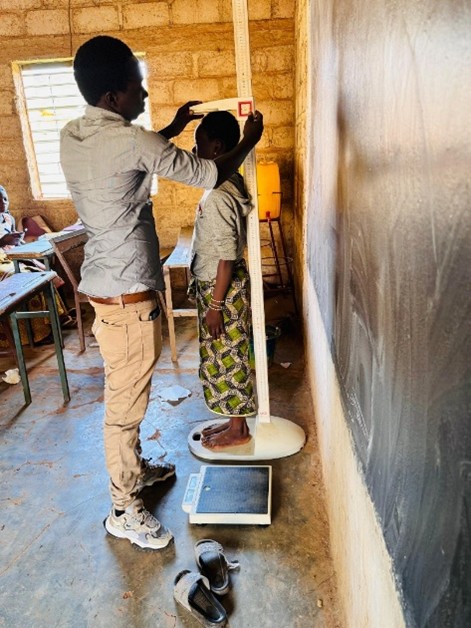
Data collection materials including stadiometers, weighing scales, mid-upper arm circumference (MUAC) measuring tapes, and EzeCheck devices were delivered to each school at the start of the respective data collection week. All materials remained on-site throughout the week, except for the EzeCheck devices, which were taken off-site daily for recharging.
Data Collection Procedures
Data collection was conducted over a four-week period, with one week allocated per school. Activities took place primarily from Monday to Friday between 1:00 PM and 5:30 PM, and on Saturdays starting at 9:00 AM. The research team arrived at schools at 12:00 PM on weekdays and 8:00 AM on Saturdays to prepare for the day’s activities.
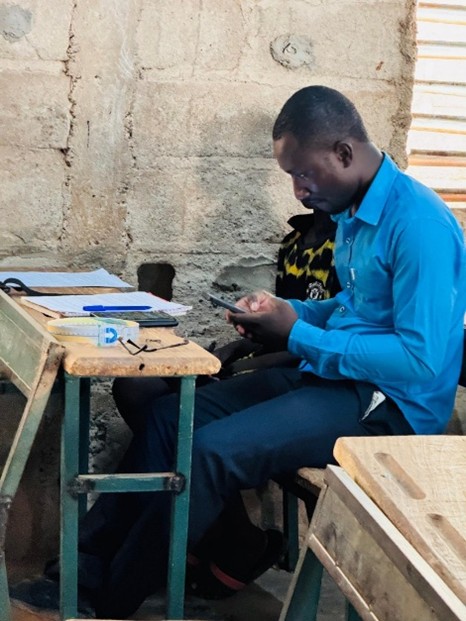
Two available classrooms were identified in each school and set up as data collection stations. Participating students were sampled per the study protocol and interviewed based on schedules developed in collaboration with school administrations. Students who waited long received a snack prior to afternoon sessions or lunch during Saturday sessions.
 |
 |
Upon verification of signed parental consent and student assent forms, each participant was assigned a unique identification number. Supervisors verified documentation before directing students to interviewers for data collection. Some non-participation was recorded due to parental refusal, student absence, or incomplete documentation. Age inconsistencies were flagged either through the digital data collection tablets or during age verification procedures.
Conclusion
At the end of each data collection day, debriefing were held to review progress, discuss refusals, identify inconsistencies, and address operational challenges. These daily reflections enabled timely adjustments to field organization and improved efficiency across subsequent sessions. In accordance with the study protocol, participants found to have haemoglobin levels below 11 g/dL, as measured using the EzeCheck device, were referred for laboratory confirmation and appropriate treatment where necessary.

0 comments