
Next stop on the photovoice journey: Member checking
After the collection and analysis of the adolescents’ photos and stories on their food environments, our photovoice journey in Kenya entered a short process of member checking. This is the moment when we go back to the young participants, show them what we found, and ask: In what ways do or don’t these findings reflect what you meant? It’s a chance for them to see how their voices have shaped the results and for us to make sure we understand their perspectives.
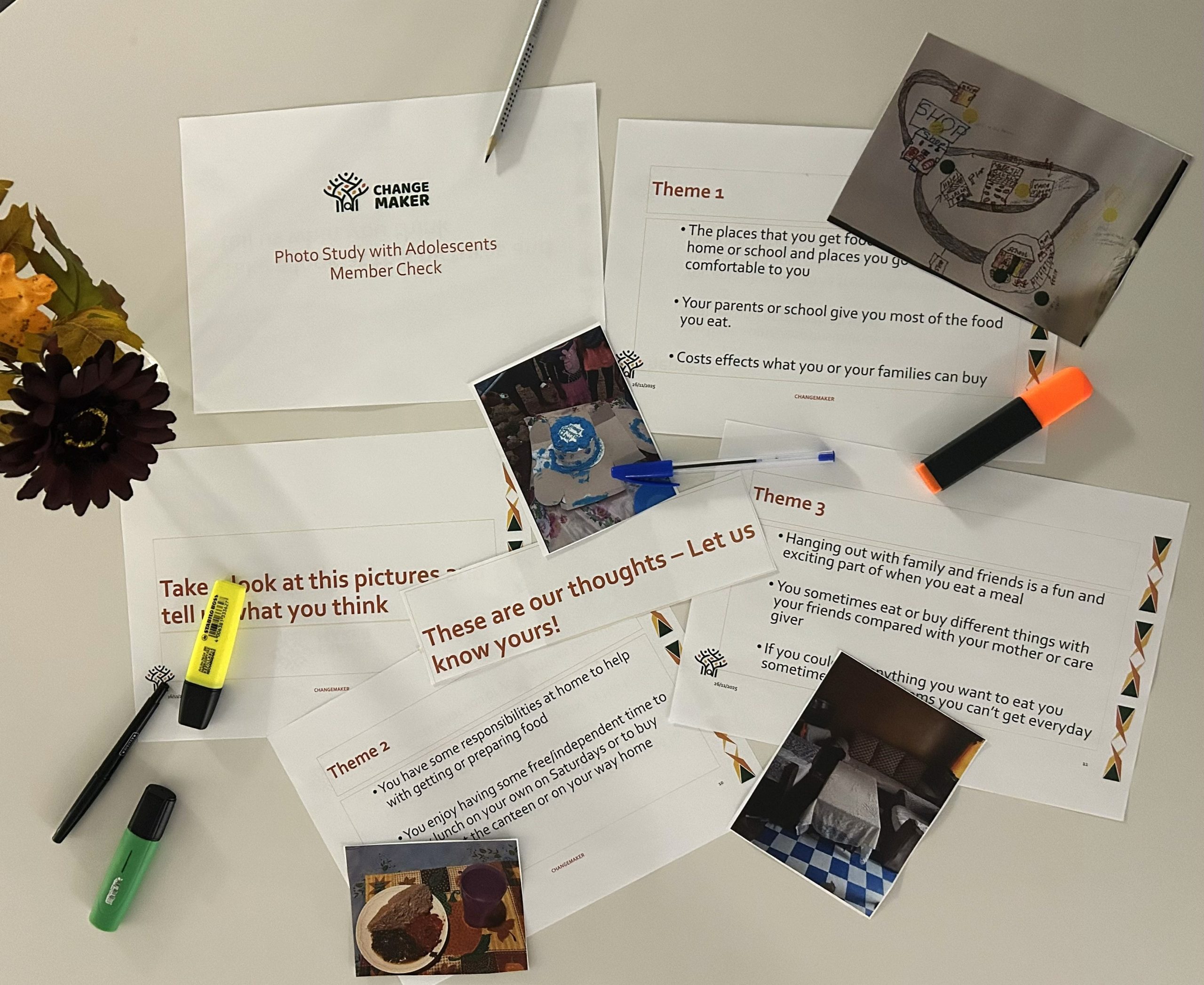
We began the process by inviting a few of the adolescents who had participated in the original photovoice sessions, and the moderators were the same as to ones who had guided them during data collection. At the start, the moderators took time to talk about a major national event, the passing of Raila Odinga and how their days went, a step which we found essential in acknowledging the participants’ realities and emotions before shifting into the dialogue.
This was followed by a self-introduction ice breaker and then the moderators reminded the participants of their role as researchers who gathered data in the photovoice activities several months before and explained how we would like their insights to help us with the analysis. We reminded them how they are integral to the analysis process.
Participants were then allowed an opportunity to flashback on the photo elicitation activities about their food environment that was conducted in March 2025. The findings were presented in three thematic areas, illustrated with selected photos and explained in descriptive language. They were first shown the photos to reflect on without the influence of our preliminary analysis. Using guided questions, such as “When you hear this theme, what do you feel? What would you change?” the moderators encouraged reflection and dialogue under each theme and were encouraged to share their thoughts and feelings.
The atmosphere was open and participatory. The moderators used open-ended questions, probing strategies, reflecting insights, and reminder that this is not an exam but a discussion to create an environment for the participants to speak freely. The adolescents contributed confidently describing their opinions on the photos, providing more detail on the themes, and describing improvements they would like in the food environment. When language became a barrier, moderators used the local language i.e., Swahili and Luo, ensuring that every voice was heard and understood.
Though the students stayed a bit longer than usual, they were reassured that their input would directly shape the final report and that the results would be shared with them once ready.
Our journey with them continues, each photo, each story, and each discussion bringing us one step closer to understanding how young people in Kenya see and shape their own paths toward health and well-being.

0 comments